Have you ever worried about your health due to mold in your home? Most people are unsure whether mold is just a surface issue, or something that could impact their health long-term.
Mold is very common in indoor spaces. You can usually find tiny mold spores in almost every building, but that doesn’t always mean there is a problem. The concern starts when mold actually begins growing because there is moisture from leaks, humidity, or water damage.
Health effects of mold exposure can vary from person to person. Some people do not notice anything, while others may get allergy-like symptoms such as sneezing, coughing or irritated eyes, if they stay in the affected environment for a long time.
Most guidelines, including those from the CDC, point to the same idea: mold itself is not unusual indoors, the real issue is when there is ongoing indoor humidity that allows it to grow and spread.
So the question is not whether mold exists, it always does, but whether it is actively growing indoors in a way that increases exposure.
What Mold Actually Is (From Field Experience and Science)
Mold is a type of fungus that reproduces through microscopic spores. These spores are present in both indoor and outdoor air all the time. In our inspections, we consistently find mold growing in places where moisture has been present for more than 24–48 hours, such as:
- Behind leaking bathroom walls
- Around poorly sealed windows
- Under sinks with slow plumbing leaks
- Inside HVAC systems with condensation
- Basements with poor ventilation
The EPA explains that mold growth indoors is primarily driven by moisture, not hygiene level or cleanliness of the home. This is an important correction many homeowners misunderstand, mold is not a dirt problem, it is a water problem first.
So, Is Mold Dangerous to Your Health?
From a medical and scientific standpoint, mold exposure is not classified as universally toxic.
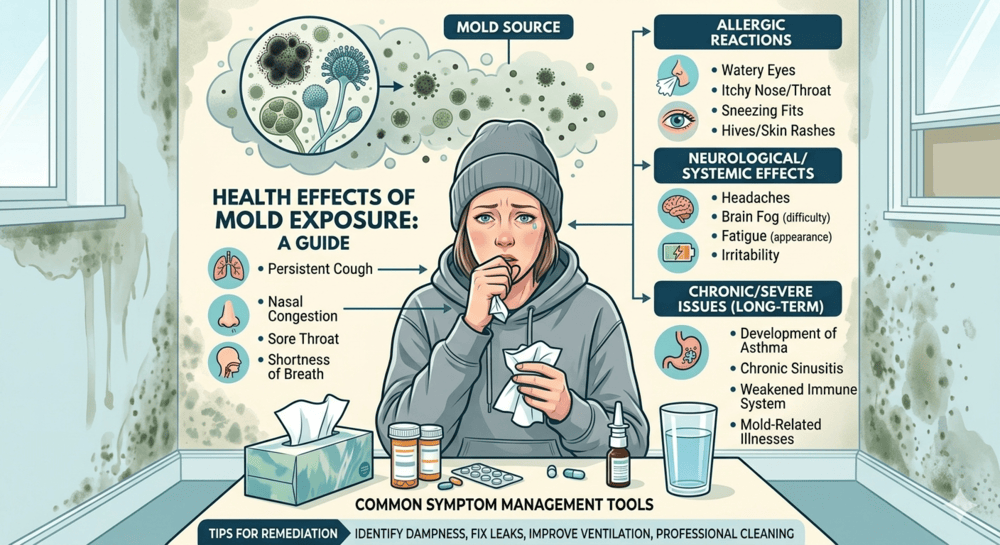
However, multiple large health organizations, including the CDC and WHO, agree that mold exposure can cause health symptoms in sensitive individuals related to allergies and respiratory irritation.
The CDC reports that exposure to damp and moldy environments can lead to upper respiratory symptoms, coughing, wheezing and eye irritation in people with asthma or allergies.
In simple terms:
- Mold is not “poisonous” in typical indoor exposure
- But it can still trigger real biological reactions
Health Effects of Mold Exposure
1. Allergic Reactions (Most Documented Effect)
This is one of the most common health effects of mold exposure. The NIOSH (CDC branch) confirms that mold exposure can trigger:
- Sneezing
- Runny or blocked nose
- Watery or itchy eyes
- Skin irritation
- Throat discomfort
We usually see symptoms improve when people leave the affected environment, which is a strong indicator of environmental sensitivity rather than infection.
2. Asthma Worsening and Airway Sensitivity
In homes with damp air or hidden moisture, people with asthma notice that their breathing problems become harder to manage. Chronic exposure to mold can cause coughing, wheezing or chest tightness to occur often.
One of the most frequent problems that we see on regular mold inspections is water damage under a floor or behind the walls. Although mold is not visible, mold spores can spread in the indoor air and cause problems for those who are vulnerable.
3. Irritation in Healthy Individuals
Not everyone reacts strongly to mold, but some people still notice discomfort after spending time in damp rooms.
This can include:
- Dry or irritated eyes
- Scratchy throat
- Feeling stuffy indoors
- Mild coughing that keeps coming back
Usually, these symptoms become more noticeable when indoor humidity problems stay unresolved for a long time or ventilation inside the home is poor
Important Scientific Clarification: “Toxic Mold” Misconception
One of the most misunderstood topics in this field is the idea of “toxic mold.”
According to CDC guidance:
- Some molds can produce mycotoxins
- However, the mold itself is not inherently toxic in typical exposure conditions
- Color or appearance does not determine danger level
This means:
- Black mold is not automatically more dangerous
- Green, white, or gray molds can all cause similar health effects
- Identification by color alone is not scientifically valid
This is something we emphasize during inspections because homeowners often panic based on appearance alone.
Who Is More Sensitive to Mold Exposure?
Not everyone reacts the same way. Based on CDC and NIEHS findings, higher-risk groups include:
- People with asthma
- Individuals with allergies
- Children
- Elderly individuals
- People with weakened immune systems
The NIEHS notes that health effects of mold exposure vary depending on type of mold, exposure level, and individual sensitivity. This variability is one reason why two people in the same home may report completely different symptoms.
Why Mold Grows Indoors
Almost every mold case we investigate traces back to one key issue: hidden or prolonged moisture exposure.
Common causes include:
- Slow plumbing leaks behind walls
- Roof leaks after storms
- Poor ventilation in bathrooms
- High indoor humidity levels
- Flooding that was not properly dried
Mold can begin growing when materials stay wet for extended periods, which is why controlling moisture is the most important prevention step.
In practice, we often find that homeowners were unaware of leaks for weeks or months before symptoms appeared.
Mold Testing: What It Actually Tells You
Prime Mold Inspection always clarifies this upfront: Mold testing is not a “pass or fail” health test.
According to CDC guidance:
- There are no health-based standards for acceptable indoor mold levels
- Air sampling alone cannot determine health risk
- Visual inspection and moisture detection are more reliable than lab numbers
This is why mold testing and inspection Burbank typically combine:
- Moisture mapping
- Visual inspection
- Infrared detection
- Limited air sampling when needed
We not just detect mold but also identify why it is growing.
When Mold Becomes a Real Problem
Mold usually becomes a bigger concern when you keep noticing the same signs again and again. Maybe there is a musty smell that never really goes away, dark spots slowly spreading on walls or ceilings or water damage that was never fully dried or repaired.
Some people also notice that they feel better after leaving the house for a few hours if the affected area has poor ventilation or hidden moisture.
At that point, the problem is more than just indoor mold air test. It usually means there is an ongoing indoor humidity issue somewhere in the building that still needs to be fixed.
Prevention: What Actually Works
Based on CDC and EPA recommendations, the most effective prevention steps include:
- Fix leaks immediately (within days, not weeks)
- Keep indoor humidity below 50%
- Ensure bathroom and kitchen ventilation
- Dry wet surfaces within 24–48 hours
- Inspect hidden plumbing and roof areas regularly
The EPA emphasizes that controlling moisture is the key to preventing mold growth in buildings.
Final Thoughts
So, is mold dangerous to your health? Based on real-world inspections and scientific evidence, mold is not universally dangerous, but it is never something to ignore when it grows indoors.
Most health effects of mold exposure are related to allergic response, airway irritation, and asthma aggravation.
The bigger issue we see every day is not the mold itself, but the hidden moisture source allowing it to grow in the first place. That’s why at Prime Mold Inspection, our approach is always focused on identifying the root cause, not just the surface growth.
If you need mold testing Pasadena services, contact Prime Mold Inspection today. We start mold testing with a proper inspection and explain why mold is present, not just whether it exists.
Disclaimer
This article is for educational purposes only and should not be considered medical advice. People experiencing persistent symptoms should consult a healthcare professional.